
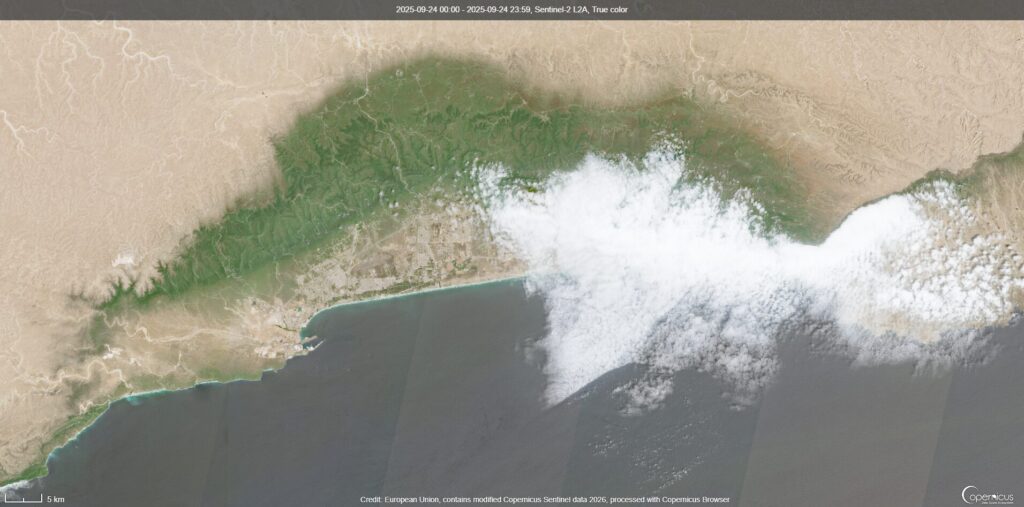
The Indian monsoon is one of the most significant factors influencing the climate patterns along the southeastern coast of Oman, particularly in the Dhofar Governorate. Its effects peak between early June and late September, during which the region experiences remarkable climatic and environmental changes that distinguish it from the rest of the Sultanate.
Climatic and Environmental Effects of the Monsoon
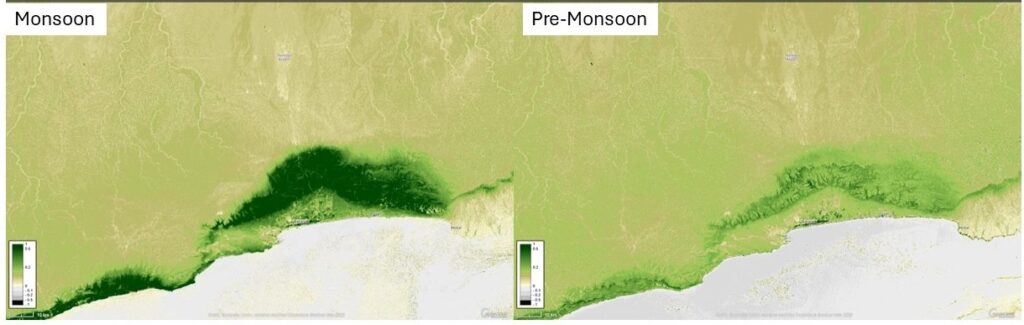
The most notable effects of the monsoon include increased cloud cover, persistent light drizzle over the Dhofar Mountains, and a noticeable drop in temperatures caused by moist maritime winds and continuous cloudiness. These conditions also produce a significant environmental transformation, as the dry mountain slopes of Dhofar turn into lush green landscapes due to the rapid growth of vegetation.
This seasonal transformation is locally known as the “Khareef” season, characterized by mild temperatures and foggy conditions that strongly influence the ecosystem and support biodiversity in the Dhofar Mountains by stimulating vegetation growth and providing favorable conditions for wildlife. These unique atmospheric conditions also create a distinctive tourism season, making the region a preferred destination for visitors during the summer months.
Influence of Upwelling on the Coastal Climate
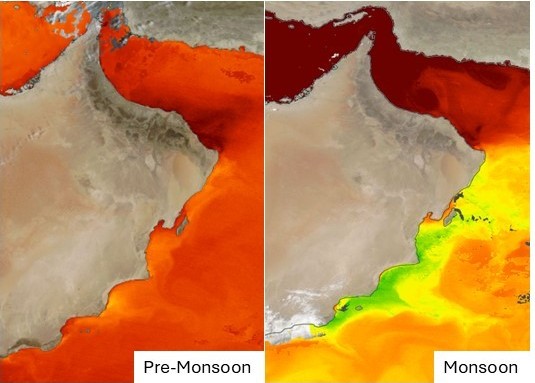
The moderation of air temperatures along the southeastern coast of Oman is closely linked to the enhancement of upwelling in the Arabian Sea during the monsoon season. This oceanic process involves the movement of colder subsurface waters upward toward the sea surface, replacing the warmer surface waters with cooler, nutrient-rich water. As air masses move over the relatively colder sea surface, their temperatures decrease, resulting in cooler and more comfortable air being advected toward the coast.
The interaction between upwelling and cooler air temperatures plays a major role in shaping the distinctive coastal climate of southeastern Oman during the Khareef season.
The figure below illustrates the difference in sea surface temperatures between the monsoon season and the pre-monsoon period. A clear decrease in sea surface temperatures can be observed during the monsoon due to the intensification of upwelling. This cooling enhances the influence of cooler marine air masses and contributes significantly to the moderation of coastal temperatures in Dhofar and nearby regions.
Air Temperatures During the Monsoon Season
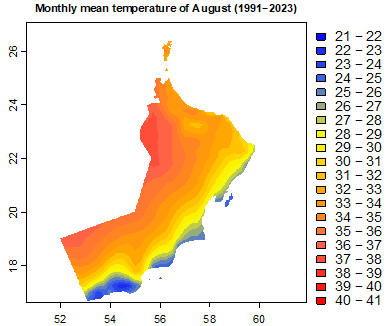
The coastal regions of southeastern Oman, particularly along the Dhofar coastline, experience a noticeable decrease in air temperatures during the monsoon season from June to September. Average temperatures during this period typically range between 21°C and 27°C, which is considered relatively mild compared to other parts of Oman where summer temperatures often exceed 40°C.
This temperature reduction is attributed to the combined influence of coastal upwelling and persistent cloud cover associated with the monsoon circulation, creating a cool and refreshing coastal environment. The map below shows the climatological monthly mean air temperature distribution during August, clearly illustrating the moderating effect of the monsoon on coastal temperatures.
Conclusion
The monsoon plays a direct role in shaping the local climate along the southeastern coast of Oman by reducing temperatures, increasing cloud cover, and enhancing upwelling activity in the Arabian Sea. Together, these factors moderate the coastal climate and promote vegetation growth, giving the region a unique climatic character during the summer months and distinguishing it from the rest of Oman in terms of weather and natural environment.