
When a tropical cyclone forms in the Arabian Sea, weather maps begin showing a widening cone stretching ahead of the storm. This shape – called the cone of probability or cone of uncertainty – is one of the most important tools in public weather communication. It is also one of the most misunderstood.
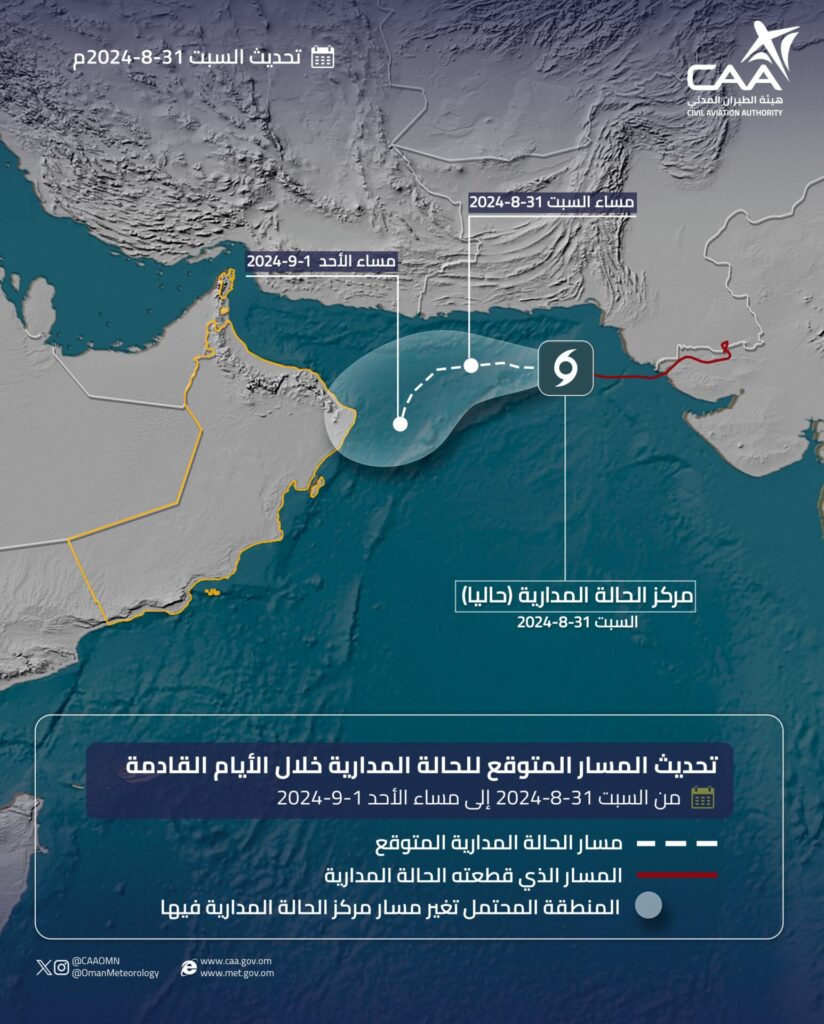
What the cone actually shows
The cone marks the probable future track of the cyclone’s centre – the eye – over the next three to five days. It is built using decades of historical forecast error data from global centres, including RSMC New Delhi, which issues official guidance for Arabian Sea cyclones.
The storm’s centre is expected to remain inside the cone roughly 67% of the time – meaning there is still a 33% chance the eye moves completely outside it.
What the cone does not show
Many people assume the cone shows the size of the cyclone, or that only areas inside the cone are at risk. This is incorrect – and it can be dangerous. The cone shows only where the eye might travel. It says nothing about the storm’s reach.
Three things to keep in mind
- Hazards reach far beyond the cone – Destructive winds, heavy rain, storm surge, and flash floods can affect areas hundreds of kilometres outside the cone’s edges. The cone is not a boundary of safety.
- The cone widens because of uncertainty, not storm size – On days four and five, the cone grows wider. This reflects increasing forecast uncertainty over time – not a physically expanding storm.
- Being outside the cone is not a guarantee of safety – A one-in-three chance of the eye crossing outside the cone is still significant. Real risk is determined by official warnings, not cone position.
What this means to you?
If your city appears outside the cone, it does not guarantee safety. Cyclones can affect areas far from the predicted track. Always follow official warnings about wind, rainfall, sea conditions, and flash floods – these reflect real impacts on the ground, not just the storm’s predicted path.
Source:https://www.nhc.noaa.gov/aboutcone.shtml