
When a tropical cyclone or strong low-pressure system hits, one of the biggest dangers is storm surge: a sudden rise in sea level caused by strong winds and low pressure. Oman’s long coastline, with its cities, ports, and villages, is especially at risk, making understanding and forecasting surges essential for safety.
What Is a Storm Surge?
A storm surge is a sudden rise in sea level above the normal tide caused by strong winds from a storm pushing water toward the shore. The total water level can be even higher if the surge coincides with high astronomical tide, and its height also depends on the storm’s strength, speed, size, path, and the shape of the seabed along the coast.
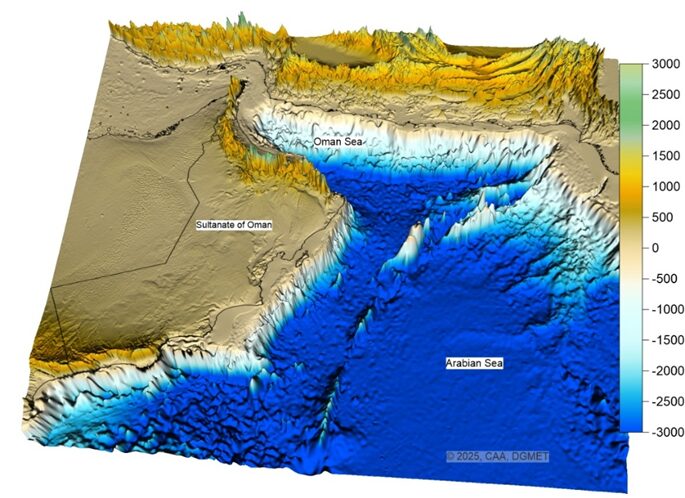
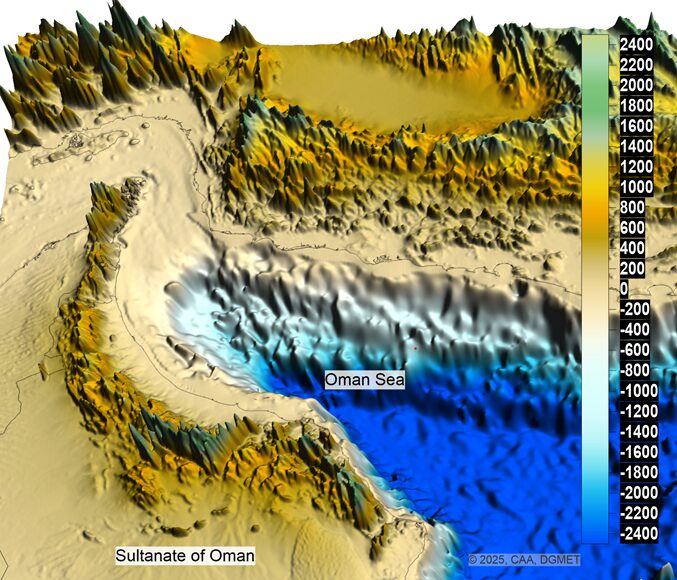
Shallow Coastal Areas Amplify Storm Surge vs Steep Offshore Areas Reduce Surge
The Al Batinah coasts have shallow, gently sloping seafloor that trap incoming water. These shallow shelves slow the dispersal of seawater, allowing it to pile up near the shore. Strong onshore winds from cyclones push this water even farther inland, meaning that even moderate storms can produce unusually high surges along these coasts.
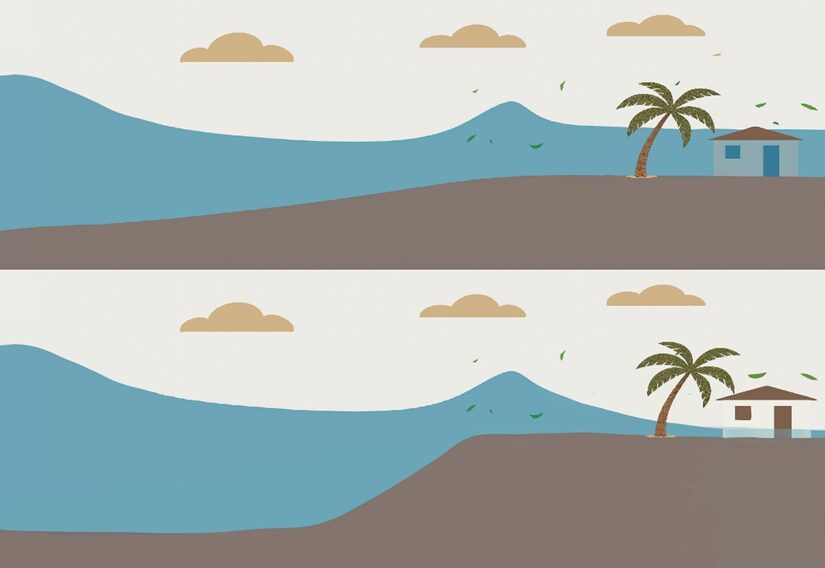
In contrast, steeper offshore slopes help water disperse energy more quickly, resulting in lower surge heights. Along Dhofar’s coast, where Cyclone Mekunu (2018) made landfall, the steep seabed likely reduced the storm surge. However, flooding still occurred due to powerful waves, intense rainfall, and runoff from wadis flowing into coastal zones.
Notable events:
- Cyclone Gonu (2007): caused a storm surge of approximately 2–3 meters along the coasts of Muscat and Al Batinah, while the total water level exceeded 5 meters in some locations in South Al Sharqiyah Governorate, due to the combination of the storm surge and high waves.
- Cyclone Mekunu (2018): Large waves (8–12 m) and rainfall caused flooding in Dhofar Governorate, although the storm surge was lower due to the steep offshore slope.
- Cyclone Shaheen (2021): Surge plus heavy rain caused localized flooding in Al Batinah.
How Storm Surges Are Forecasted
National Multi-Hazard Early Warning Center use advanced models combining:
- Wind and pressure data
- Coastal bathymetry and slopes
- Tide levels
- Hydrodynamic simulations