
Flash floods, including wadi flows, can develop rapidly as a result of heavy rainfall over a short period of time and may become life-threatening within minutes, especially in wadis and low-lying areas. Following proper safety measures can significantly reduce risks and help protect lives.

Source: https://x.com/CDAA_OMAN/status/1545064850186969088
Before a Flash Flood
- Monitor weather forecasts and official warnings issued by national authorities.
- Be aware of flood-prone areas, especially wadis, valleys, and low-lying roads.
- Avoid camping or parking near wadis, even if conditions appear dry. Flooding may occur suddenly.
- Prepare an emergency kit with water, food, a flashlight, medications, and important documents.
During a Flash Flood
- Do not cross flooded wadis or roads — flowing water may be deeper and stronger than it appears.
- Follow the safety message: “Turn Around, Don’t Drown.”
- Move immediately to higher ground if water levels begin rising.
- Avoid walking through floodwater.
- Never drive through floodwaters.
- Stay away from bridges, drainage channels, and fast-flowing water.
If You Are Driving

- Turn around and choose an alternative route.
- If your vehicle becomes trapped by rising water, leave it immediately (if safe to do so) and move to higher ground.
- Do not drive around road barriers or warning signs.
- As little as 15 cm (≈ 0.15 m) of fast-moving water can knock an adult off their feet.
- Around 30 cm (≈ 0.30 m) of flowing water can sweep away a small vehicle.
- Approximately 45–60 cm (≈ 0.45–0.60 m) can move larger SUVs and trucks.
After the Flood
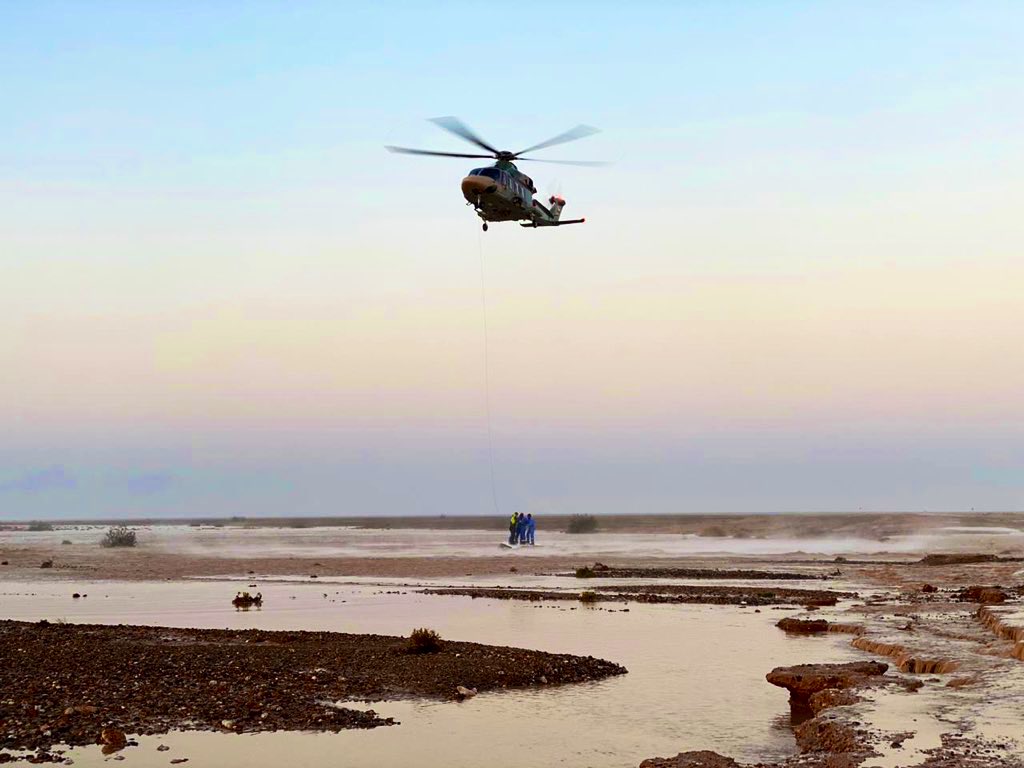
Source: https://x.com/RoyalOmanPolice/status/1203904605916151808
- Avoid contact with floodwater, which may be contaminated or conceal hidden hazards.
- Stay away from damaged roads, bridges, and electrical lines.
- Return home only after authorities declare the area safe.